 Call833-268-8277


Catastrophic Injury · Medical Malpractice · Syracuse, NY
When a neurological injury changes your life, you deserve clear answers and experienced legal guidance.
Free consultations for people and families affected by serious brain, spinal cord, and nerve injuries.
A serious brain, spinal cord, or nerve injury can change how you move, think, work, communicate, and care for yourself. What begins as an accident or a medical emergency can turn into months of rehabilitation, uncertainty about recovery, and hard decisions about your family’s future.
If someone else’s negligence caused your injury or made an existing condition worse, you may have legal options.
At Bottar Law, PLLC, our Syracuse attorneys represent people and families affected by catastrophic injuries, including neurological harm caused by accidents and medical malpractice. These cases require careful investigation, command of complex medical evidence, and a clear understanding of how permanent limitations affect daily life.
Our role is to investigate what happened, explain your legal options, and pursue accountability where the evidence supports a claim.
You do not need to understand every diagnosis or legal requirement before you call. You need a place to begin.
Neurological injury claims are rarely straightforward. A person may look physically healthy while living with significant cognitive impairment. Another may need extensive help with mobility, personal care, or ordinary activities. In some cases, the full extent of the injury is not known for months.
These cases demand more than a review of medical bills.
Bottar Law handles serious personal injury and medical malpractice litigation in Syracuse and throughout New York. Our experience with complex medical evidence and catastrophic injury claims shapes how we investigate neurological harm: we examine not only how the injury happened, but how it will affect the rest of a person’s life.
A neurological injury case may require reviewing emergency records, imaging studies, specialist evaluations, rehabilitation documentation, and evidence about the event that caused the harm.
Depending on the issues involved, we may consult neurologists, neurosurgeons, rehabilitation physicians, life care planners, and other qualified professionals. In malpractice cases, New York practice generally requires qualified medical expert support to establish the standard of care and causation.
Our objective is to identify the responsible parties, determine what the evidence supports, and build a claim that accounts for the injury’s documented consequences.
People living with neurological injuries often face difficult decisions while dealing with fatigue, pain, emotional distress, or a loss of independence.
Our approach emphasizes clear communication, careful preparation, and honest explanations. We want you to understand what is happening, why particular evidence matters, and what comes next.
You have already been through enough. You should not have to navigate a complicated legal claim alone.
A brain injury can interfere with the functions that make everyday life possible, including memory, attention, movement, communication, emotional regulation, and judgment.
Not all brain injuries are alike. Their causes, severity, treatment, and long-term effects differ substantially.
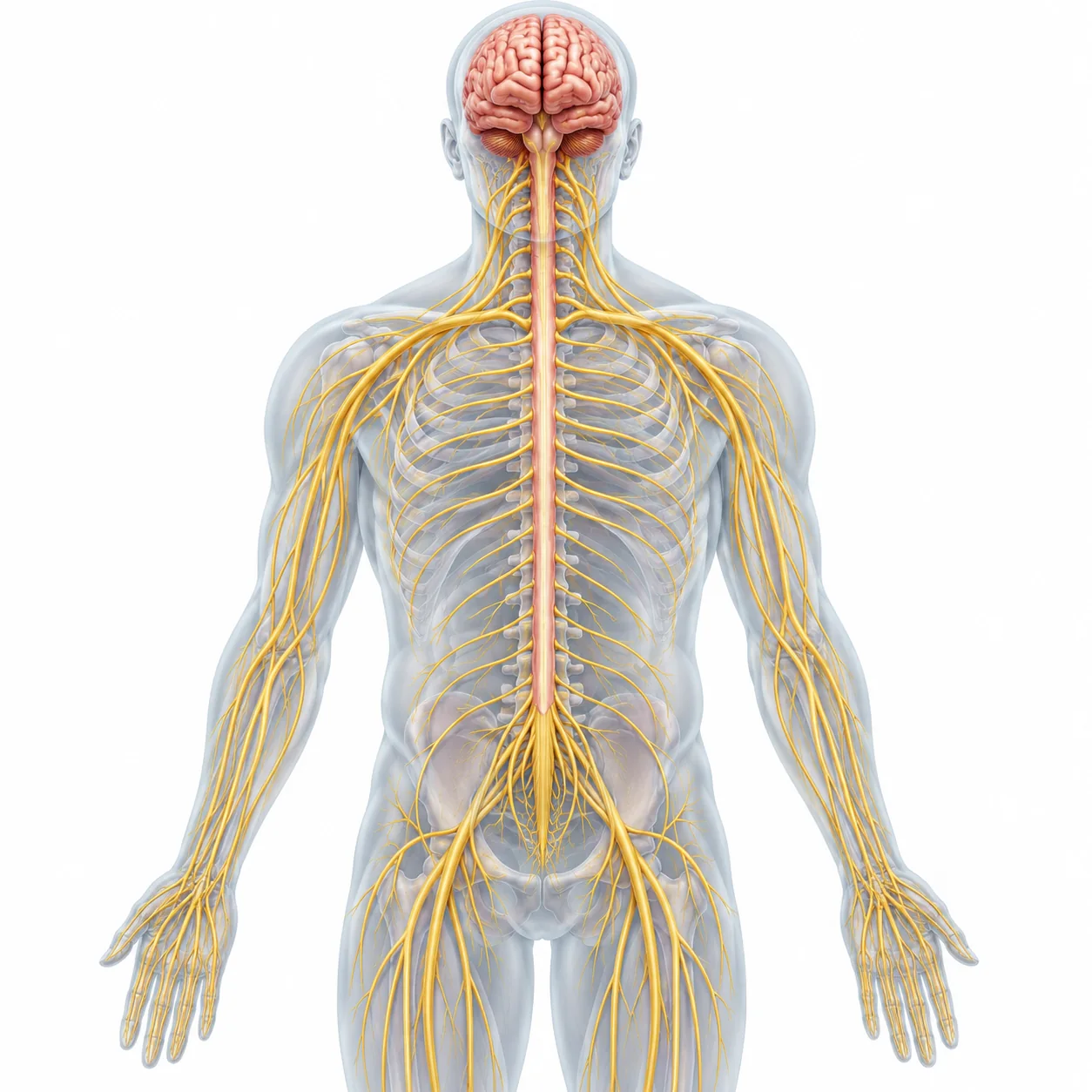
A traumatic brain injury (TBI) results from an external force that disrupts normal brain function. Causes include a direct blow, rapid acceleration or deceleration, or a penetrating injury. A TBI can occur in a motor vehicle collision, a fall, a construction accident, or another traumatic event.
Possible effects include:
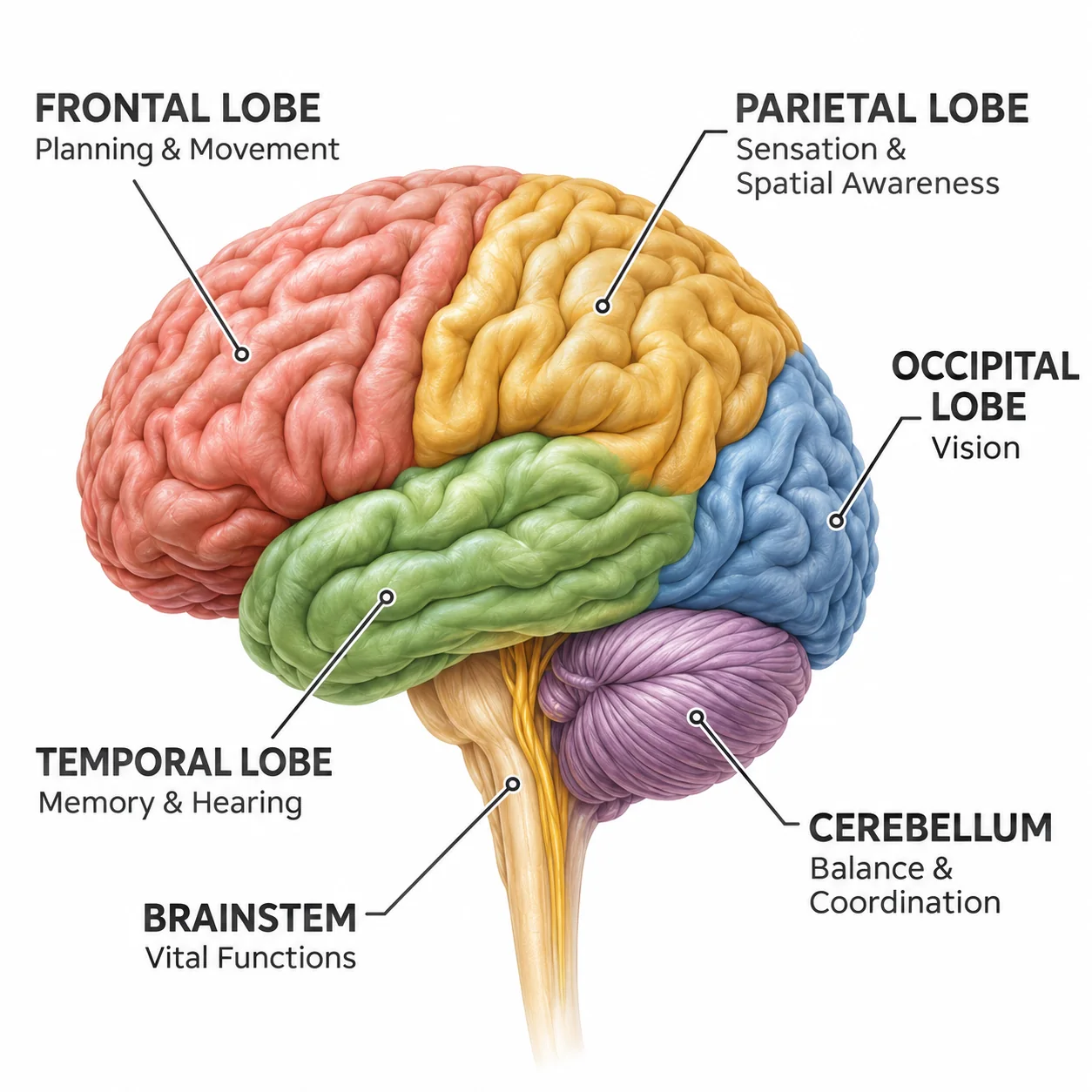
A concussion is a form of mild traumatic brain injury, but mild describes the initial clinical classification, not the impact on a person’s life. Some people recover quickly. Others develop post-concussion syndrome with persistent symptoms that require further evaluation and treatment.
Not every brain injury results from an external impact.
An acquired brain injury can arise from oxygen deprivation, stroke, infection, or other disease processes. A preventable delay in recognizing a stroke, an anesthesia complication, or a failure to respond to falling oxygen levels may raise questions of medical negligence.
An unfavorable outcome alone does not establish malpractice. A claim requires evidence that a provider departed from the accepted standard of care and that the departure caused harm. Our guide to how medical negligence is proven explains what that evidence looks like.
Brain injury litigation can involve emergency department records, CT or MRI studies, neurological examinations, neuropsychological testing, and observations from family members. These records help explain changes in cognition, behavior, work capacity, and independence.
Because many brain injury impairments are invisible to others, documenting functional changes is especially important.
The spinal cord carries signals between the brain and much of the body. Damage to it can disrupt movement, sensation, and automatic functions such as bladder, bowel, and cardiovascular regulation.
A spinal cord injury is medically distinct from a fractured vertebra, a herniated or bulging disc, or a nerve root injury. A person can sustain a serious spinal fracture without spinal cord damage, and spinal cord injury can sometimes occur without an obvious fracture.
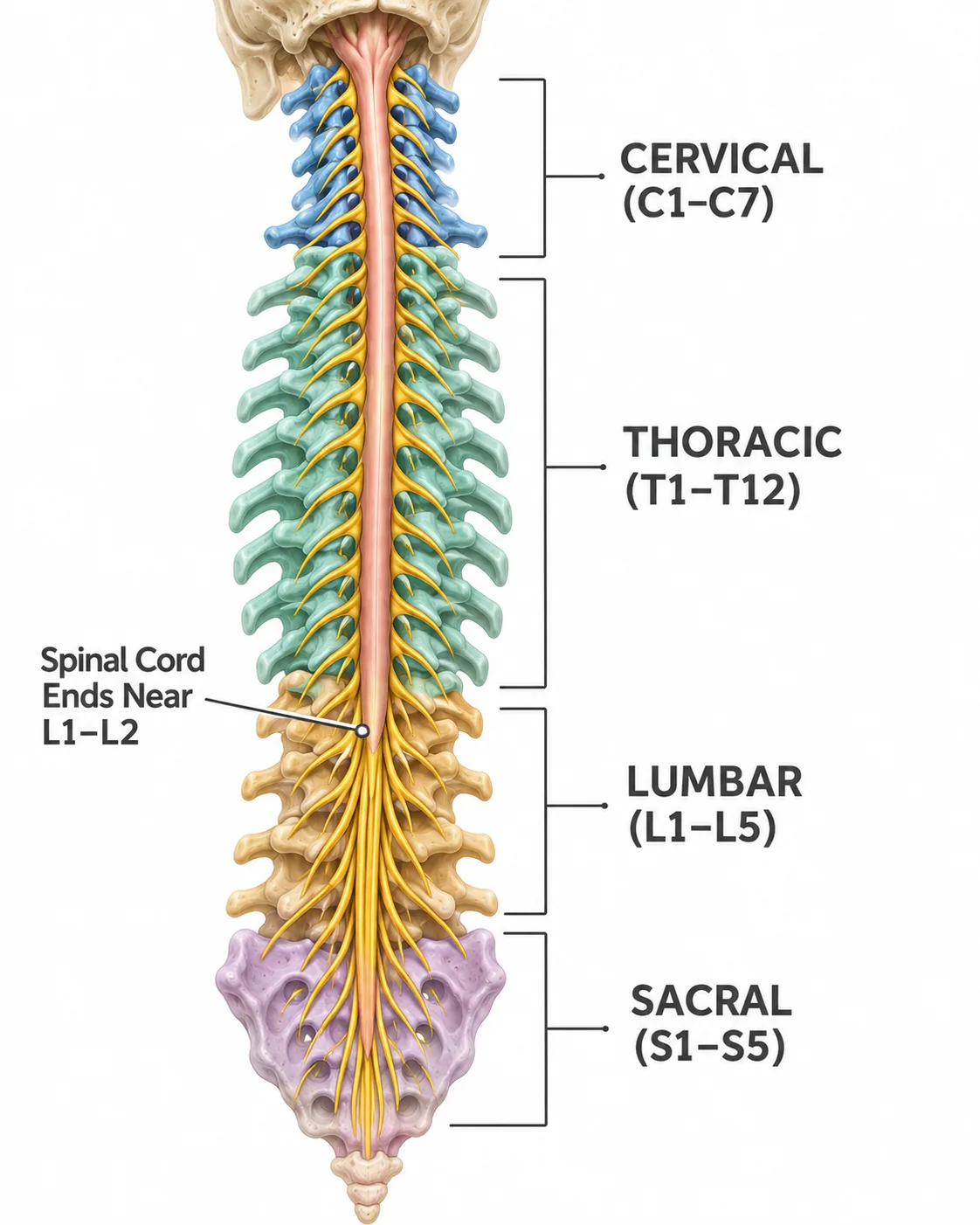
Clinicians classify spinal cord injuries using standardized neurological examinations.
A complete injury involves no preserved sensory or motor function in the lowest sacral segments. An incomplete injury involves some preserved function below the neurological level of injury.
The consequences depend on the location and severity of the damage. Cervical injuries may affect the arms, legs, and trunk, a pattern described as tetraplegia (quadriplegia). Injuries lower on the cord may primarily affect the trunk and legs, described as paraplegia. These terms describe patterns of impairment; they do not predict a person’s eventual functional abilities.
People with significant spinal cord injuries may need rehabilitation, mobility equipment, accessible housing, personal assistance, and lifelong medical care. Complications can include pressure injuries, spasticity, neuropathic pain, bladder dysfunction, and respiratory problems.
Some people regain meaningful function; others live with lasting limitations. When negligence causes spinal cord damage, a legal claim must account for decades of potential care, equipment replacement, lost earning capacity, and changes in daily living.
Peripheral nerves carry information between the central nervous system and the rest of the body. A nerve injury can cause weakness, numbness, pain, altered sensation, or loss of muscle control. The effects depend on which nerve is involved, how badly it is damaged, and whether recovery or surgical repair is possible.
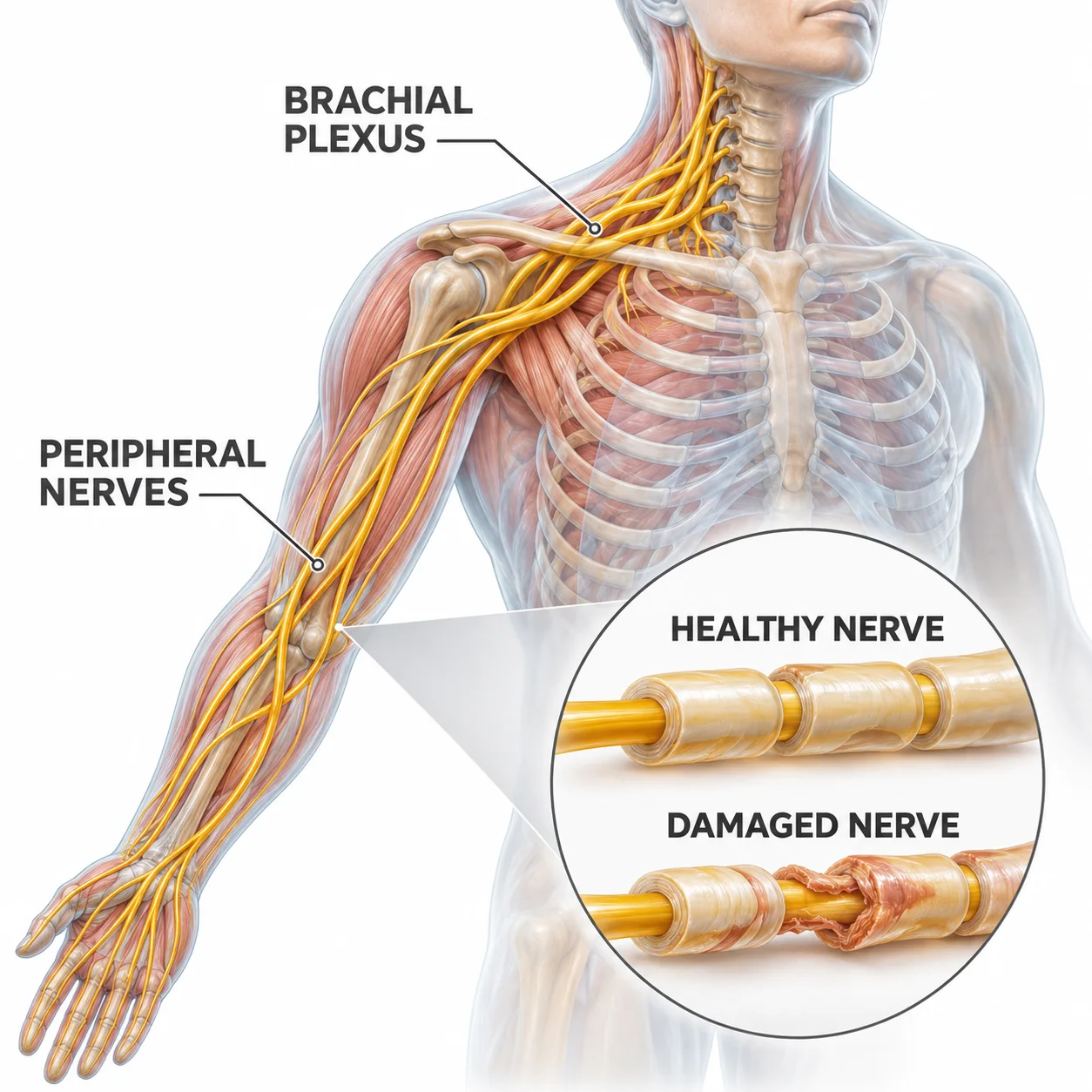
Peripheral neuropathy describes dysfunction of the peripheral nerves. It can arise from diabetes, toxins, systemic disease, or trauma, so a diagnosis alone is not evidence of an accident or malpractice.
Some nerve injuries develop into complex regional pain syndrome (CRPS), a chronic pain condition that can be severe and disabling out of proportion to the original injury.
Traumatic nerve damage can result from crushing, stretching, laceration, or compression.
Some nerve injuries happen during surgery or medical treatment through improper positioning, avoidable compression, or direct trauma to a nerve. Not every postoperative nerve injury is preventable. Determining whether a surgical error occurred requires examining the procedure, its recognized risks, the care provided, and the medical evidence.
Diagnostic tools include electromyography (EMG), nerve conduction studies, imaging, and specialist examinations.
A neurological injury may give rise to a claim when another person or business fails to use reasonable care.
Car, truck, motorcycle, bicycle, and pedestrian collisions can cause head trauma, spinal cord damage, and peripheral nerve injuries. The investigation may examine driver conduct, roadway conditions, vehicle data, crash reconstruction, and medical records.
New York’s no-fault insurance system affects claims arising from motor vehicle accidents. In many cases, an injured person must meet the statutory serious-injury threshold to pursue pain and suffering damages against another driver. Different rules apply to motorcycle riders and certain other situations.
Falls can cause serious head and spinal injuries, particularly from height. Liability may arise from unsafe walking surfaces, poor maintenance, or hazardous conditions covered by premises liability law.
For construction and workplace accidents, New York Labor Law provisions may provide additional protections in qualifying cases, depending on the work performed, how the accident happened, and the parties involved.
Medical malpractice cases differ from accident claims because they turn on professional standards of medical care. A provider may be negligent when care departs from accepted medical practice and that departure causes injury. If you are unsure whether what happened qualifies, start with Do I Have a Medical Malpractice Case?
Some neurological emergencies require rapid assessment and intervention. A failure to recognize the warning signs of stroke, spinal cord compression, infection, or a brain aneurysm can cause avoidable, permanent harm.
A claim must show that the medical team should have acted differently and that timely care would probably have changed the outcome. Learn more about failure to diagnose claims.
Potential claims may involve surgical injury to a nerve, improper patient positioning, failure to monitor neurological status, or an inadequate response to a postoperative complication. Anesthesia events can raise concerns about oxygenation, ventilation, and patient monitoring.
Recognized complications can occur even with appropriate care, so these cases require careful analysis. Bottar Law reviews the records and, where appropriate, works with qualified medical professionals to determine whether a departure from accepted care caused the injury. See What If My Hospital Made a Mistake During My Treatment?
Some birth injuries involve the brain, spinal cord, or peripheral nerves, including neonatal brain injury from oxygen deprivation and brachial plexus injury affecting an infant’s arm.
A birth injury investigation may consider fetal monitoring, delivery decisions, neonatal assessment, and whether a departure from accepted practice caused the injury. Families can find a more detailed discussion on our birth injuries and birth trauma page.
Neurological injuries often occur alongside other serious physical injuries. A traumatic amputation, a severe crush injury, or loss of organ function can significantly affect rehabilitation and long-term independence.
Some injuries involve both structural and neurological damage. A severe limb injury may damage peripheral nerves, while a spinal cord injury may affect bladder or bowel function without direct trauma to those organs. Medical complications such as acute respiratory distress syndrome (ARDS) or kidney failure requiring dialysis can also follow serious trauma or medical errors.
When several injuries arise from the same negligent event, a complete legal evaluation should consider their combined effect on daily life, medical needs, and future earning capacity. Learn more about our broader catastrophic personal injury practice.
A neurological injury creates financial and personal consequences that extend far beyond the initial hospitalization. New York law permits recovery of economic and non-economic damages when the elements of a claim are proven.
Economic damages cover measurable financial losses, which may include:
Future damages require evidence supporting both the anticipated need and its reasonable cost, often through a life care plan and economic analysis.
Non-economic damages address the human consequences of an injury, including physical pain, emotional suffering, and loss of enjoyment of life. For someone with a serious neurological injury, that may mean lost independence, difficulty taking part in family life, or the inability to return to meaningful work and routines.
New York does not impose a general statutory cap on compensatory damages in personal injury or medical malpractice cases. For malpractice claims specifically, see How Do Medical Malpractice Caps Affect My Case? and What Damages Can I Recover?
The value of any claim depends on the facts, the evidence, the applicable law, and the nature of the injury. No attorney can responsibly promise a particular settlement or verdict.

A well-supported claim begins with understanding what happened and identifying the evidence needed to establish responsibility.
We begin by listening. You can explain how the injury happened, the medical care you received, and the questions weighing on you or your family. We will discuss potential legal issues, important deadlines, and whether further investigation makes sense.
When we accept a case, the investigation may include obtaining medical records, identifying witnesses, reviewing incident reports, preserving evidence, and consulting qualified professionals. In a malpractice matter, the focus is the standard of care and whether a departure caused the injury. In an accident claim, the focus includes unsafe conduct, physical evidence, insurance coverage, and legal responsibility.
We examine how the injury affects your life: medical treatment, rehabilitation, employment, household responsibilities, independence, and anticipated future care. The goal is an evidence-based picture of every loss recoverable under New York law.
Some claims resolve through negotiation. Others require litigation and, potentially, trial. The right course depends on the evidence, the other side’s position, and your circumstances. For malpractice cases, our guide on settlement vs. trial explains the tradeoffs.
Throughout the process, we explain important developments and help you make informed decisions.
Serious neurological injury cases call for attorneys who are comfortable with complex medical records, expert testimony, and disputed questions of causation. Bottar Law’s attorneys practice personal injury and medical malpractice litigation throughout Central New York.

Managing Member
Anthony S. Bottar is the Managing Member of Bottar Law, PLLC, and an accomplished trial attorney with more than 47 years of experience representing individuals and families in complex medical malpractice, wrongful death, and catastrophic personal injury cases. His practice includes serious injuries involving the brain, spinal cord, nerves, paralysis, and birth-related complications. A past president of the New York State Academy of Trial Lawyers, Anthony has earned professional recognition from The Best Lawyers in America, including multiple Syracuse Lawyer of the Year honors. Throughout his career, he has combined extensive courtroom experience with a commitment to helping people and families navigate the legal and personal challenges of life-altering injuries.
View Anthony S. Bottar’s profile
Member
Michael A. Bottar is an accomplished trial attorney at Bottar Law, PLLC, with more than 20 years of experience representing individuals and families in complex medical malpractice, wrongful death, construction accident, and catastrophic personal injury cases throughout New York State. His practice includes serious neurological injuries involving strokes, birth injuries, surgical errors, and other life-altering medical complications. The immediate past president of the New York State Academy of Trial Lawyers, Michael has earned extensive professional recognition, including multiple Syracuse Lawyer of the Year honors from The Best Lawyers in America, selection to Upstate New York Super Lawyers, and an AV Preeminent rating from Martindale-Hubbell. He has personally recovered more than $200 million for clients and has examined more than 500 physicians under oath, reflecting his extensive experience handling medically complex litigation. A Syracuse native and adjunct professor at Syracuse University College of Law, Michael combines courtroom advocacy, medical knowledge, and a commitment to helping injured individuals and families navigate difficult legal challenges.
View Michael A. Bottar’s profile
Member
Samantha C. Riggi is a trial attorney and Member of Bottar Law, PLLC, with nearly a decade of experience representing individuals and families in complex medical malpractice, wrongful death, workplace accident, motor vehicle, product liability, and catastrophic personal injury cases. A graduate of Siena College, magna cum laude, and Syracuse University College of Law, Samantha has earned professional recognition from The Best Lawyers in America as one of its Ones to Watch (2020–2025) and Upstate New York Super Lawyers as a Rising Star (2019–2024). She was also named to the Central New York Business Journal’s 40 Under 40 in 2024 and received the Central New York Women’s Bar Association’s Beacon Award in 2022. Samantha serves as president of the Central New York Women’s Bar Association and on the Board of Directors of the Onondaga County Bar Association. A published legal author and accomplished advocate, she combines litigation experience, professional leadership, and a commitment to helping seriously injured individuals and their families navigate complex legal challenges with clarity and confidence.
View Samantha C. Riggi’s profileMeet the full Bottar Law team, review the firm’s professional honors, or read what clients say in our testimonials.
Prior results do not guarantee a similar outcome.
It depends on the severity and permanence of the injury, the strength of the evidence on negligence and causation, available insurance, and New York law. Damages may include medical expenses, lost earnings, future care needs, and pain and suffering. A reliable estimate requires an individualized review.
For injuries caused by medical errors, see How Much Is My Medical Malpractice Case Worth? and Can I Get Compensation for Medical Errors That Caused Permanent Injury?
Possibly. A hospital or healthcare provider may be responsible if a departure from accepted medical practice caused your injury. A poor outcome, a known complication, or a diagnostic disagreement does not automatically establish malpractice, so medical records and expert review are essential.
Learn more in What If My Hospital Made a Mistake During My Treatment? and What Is Medical Negligence vs. Medical Malpractice?
Relevant evidence may include medical records, diagnostic imaging, specialist examinations, rehabilitation records, incident reports, witness accounts, employment records, and documentation of functional changes. The evidence needed depends on whether the claim involves an accident, medical malpractice, or another cause.
In a medical malpractice case, almost always. New York requires a certificate of merit when a malpractice lawsuit is filed, and expert testimony is typically needed to prove the standard of care and causation. Accident cases involving neurological injuries also frequently rely on medical experts to explain the injury and future care needs. See Do I Need an Expert Witness for My Medical Malpractice Case?
For most personal injury claims based on negligence, the general deadline is three years. Medical malpractice claims generally must be filed within two years and six months, subject to specific accrual rules and exceptions. Claims against public entities may require a notice of claim within as little as 90 days. Wrongful death claims generally have a two-year deadline.
Exceptions involving minors, continuous treatment, and foreign objects can significantly change the analysis. Because deadlines vary, seek legal advice promptly. For malpractice-specific rules, read What’s the Statute of Limitations for Medical Malpractice in New York? For claims involving a municipality or public agency, see our governmental negligence page.
Some neurological symptoms and limitations become apparent only over time. Delayed symptoms do not automatically extend a New York filing deadline, so an attorney should evaluate the relevant dates, medical history, and potential exceptions as early as possible. If you suspect a medical error, see What Should I Do Immediately After Discovering Medical Malpractice?
An authorized representative, guardian, or other legally recognized person may need to act on the injured person’s behalf. The right arrangement depends on the person’s capacity, existing legal documents such as a power of attorney, and applicable court procedures.
If a loved one died as a result of the injury, see Can I File a Medical Malpractice Lawsuit for My Deceased Relative?
No. Bottar Law offers a free initial consultation for prospective injury and malpractice clients. Any fee agreement, including contingency fees and responsibility for litigation expenses, is explained and confirmed in writing before representation begins. Learn more in What Is a Contingency Fee Agreement? and Can I Afford a Medical Malpractice Attorney?
Knowledge Center For more answers, visit the Bottar Law Knowledge Center.
When a brain, spinal cord, or nerve injury changes your life, you may be facing questions no family expects to answer.
How much recovery is possible? Who was responsible? How will care be paid for? What happens if returning to work is no longer possible?
You deserve thoughtful answers grounded in the facts of your situation.
Bottar Law approaches serious injury claims with careful preparation, respect for the people involved, and a commitment to clear communication. Our office is located at the historic Fairfield Estate, a longstanding Central New York landmark.
If you believe negligence or medical malpractice caused a serious neurological injury, contact Bottar Law to discuss your options.
Attorney Advertising. Prior results do not guarantee a similar outcome. The information on this page is general and does not create an attorney-client relationship.