 Call833-268-8277


Government Negligence · Personal Injury · Syracuse, NY
When a government agency or employee causes serious harm, understanding your legal rights should not become another burden.
Free consultations for people harmed by government negligence in Syracuse and Upstate New York.
An injury caused by government negligence can leave you facing medical bills, lost income, and difficult questions about accountability. You may wonder whether a public agency can be held responsible, how long you have to act, or whether the law protects the government from being sued.
Government negligence occurs when a public entity or government employee engages in legally actionable conduct that causes injury. Unlike many ordinary personal injury cases, claims against municipal, state, and federal government defendants can involve sovereign immunity, special filing procedures, and strict deadlines.
At Bottar Law, PLLC, our Syracuse government negligence lawyers help injured individuals and families understand their options under New York law. Our law firm handles complex personal injury and medical malpractice matters involving serious harm.
Serving Syracuse, NY, and communities throughout Upstate New York, our legal team can evaluate claims involving government vehicles, dangerous public property, public healthcare facilities, and other potentially negligent government conduct.
Our personal injury lawyers understand how overwhelming the process can feel. We aim to provide clear answers, explain what comes next, and help you make informed decisions.
Request a Free Consultation
Speak with Bottar Law about what happened and whether legal action may be available. An early review can be especially important when a government agency may be responsible.
Government negligence generally involves a public agency or government employee whose conduct breaches an applicable legal duty and causes an injury for which the government may be held responsible.
Examples may include negligent operation of a government vehicle, failure to address a dangerous condition on public property, or medical malpractice by certain government-employed healthcare providers.
However, government liability is not determined by the injury alone.
Under New York law, governmental immunity and statutory limitations can affect whether a personal injury claim is permitted. The legal analysis may depend on whether the government was performing a proprietary function, such as maintaining property, or exercising governmental authority, such as certain regulatory or protective functions.
The doctrine of sovereign immunity historically protected government entities from lawsuits without their consent. Statutes permitting certain claims create exceptions, but those exceptions often impose special requirements.
A government agency may face liability when applicable law permits a claim, the defendant owed an actionable duty, and negligent conduct caused legally compensable harm.
In some cases, additional requirements apply, including proof of a special duty owed to the injured person. Governmental immunity may also protect certain discretionary decisions.
Not strict liability
Government negligence is generally not the same as strict liability. A serious injury does not automatically establish fault, and strict liability principles should not be assumed to apply merely because a public agency was involved.
An experienced lawyer from Bottar Law can investigate the circumstances, identify the correct defendant, and evaluate whether a viable personal injury claim exists.
Understanding these distinctions helps protect your legal rights before procedural deadlines expire.
Government-related injuries can arise in many settings. Determining the responsible entity is often one of the first challenges in a personal injury case.
A motor vehicle accident involving a government employee may raise different legal questions from an ordinary collision between private drivers.
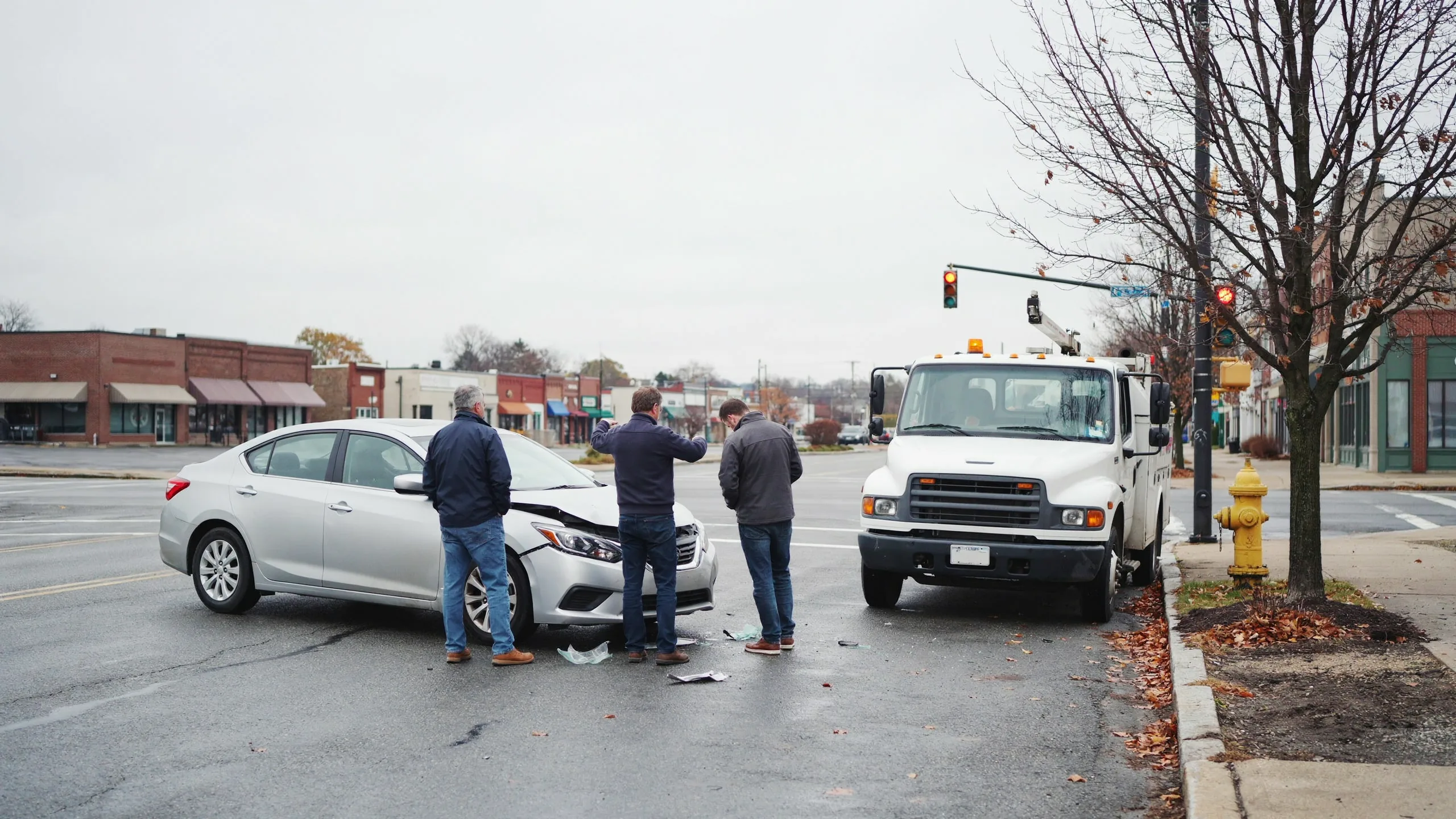
Examples include:
These incidents can cause serious injuries, including a broken bone, spinal cord damage, or brain injury.
A government vehicle’s involvement does not automatically establish liability. Investigating the driver’s employment, whether the employee was acting within the scope of employment, and which entity operated the vehicle can be essential.
Public roads, sidewalks, parks, buildings, and construction sites may contain hazardous conditions.
A personal injury claim might involve a defective staircase, an unsafe walkway, a dangerous roadway condition, or construction accidents connected to government property.

Depending on the applicable law, important questions may include whether the defect existed long enough to be discovered, whether the government had legally sufficient notice, and whether required maintenance was performed.
Prior written notice laws
Some municipal property claims are subject to prior written notice laws. These rules can significantly affect liability even when a hazardous condition appears obvious.
A fall causing a broken bone or brain injury can create lasting consequences. Establishing responsibility requires more than showing that someone was hurt.
Our attorneys can investigate the known risks, available records, and legal requirements applicable to the property.
Medical malpractice involving a government-operated or federally covered healthcare facility can require a specialized claims process.

Medical negligence may involve surgical errors, delayed diagnoses, medication errors, or other failures to provide appropriate medical treatment.
Medical malpractice cases involving public hospitals, Veterans Affairs facilities, and certain federally covered healthcare providers may be governed by different procedural rules.
The legal status of the facility and medical professionals matters. Not every hospital receiving government funding is a government defendant.
A medical malpractice lawyer must examine the provider’s employment, the facility’s legal status, and the applicable standard of medical care before determining how medical malpractice claims should proceed.
If you are uncertain whether a healthcare provider’s conduct constitutes negligence, our Knowledge Center explains the difference between medical negligence and medical malpractice.
When a government-operated nursing home or qualifying public care facility fails to provide appropriate care, residents may suffer preventable injuries.
Potential concerns include inadequate supervision, untreated pressure injuries, medication mistakes, or failures to respond to changes in a resident’s condition.
Some cases involve catastrophic harm or wrongful death.
For a family member seeking answers, identifying who operated the facility and employed the responsible caregivers can be critical.
Wrongful death cases involving government entities may require compliance with special notice and filing rules.
Families considering legal action after losing a loved one may also find it helpful to understand whether a medical malpractice lawsuit can be filed for a deceased relative.
Medical malpractice claims against government-related healthcare providers require careful investigation because the identity and legal status of the defendant can determine where and how the case must be filed.
A medical malpractice lawyer evaluating these matters must consider both the underlying quality of medical treatment and the laws governing public entities.
Medical malpractice cases involving public hospitals or federal healthcare providers may proceed differently from medical malpractice lawsuits against private hospitals.
For example, medical malpractice claims involving certain federal employees acting within the scope of their employment may fall under the Federal Tort Claims Act.
Other medical malpractice cases may involve New York municipal hospitals or state-operated institutions.
Certain federally supported health centers and healthcare professionals may also have coverage under federal law, but that status must be verified.
The fact that an institution receives public funding does not necessarily establish that the federal government is the appropriate defendant.
A medical malpractice lawyer from Bottar Law can investigate employment records, statutory coverage, and the applicable filing process.
If a patient believes a hospital made a preventable mistake, our Knowledge Center discusses what happens when a hospital makes an error during medical treatment.
An injured patient may have questions after complications during surgery, anesthesia, or emergency care.
Potential medical malpractice concerns include:
Not every complication represents medical malpractice.
An adverse outcome in an emergency room does not, by itself, establish negligence. Medical malpractice claims generally require evidence that the care departed from the applicable professional standard and caused injury.
A medical malpractice lawyer may work with qualified medical professionals to evaluate whether the treatment met accepted standards.
Medical knowledge, expert review, and careful examination of medical records are often central to these cases.
For more information, see our Knowledge Center article about whether a patient can sue a doctor for a surgical error.
A timely diagnosis can be important when a patient has a serious medical condition.
Medical malpractice may occur when a doctor fails to recognize significant symptoms, order indicated testing, appropriately interpret results, or arrange necessary follow-up.
For example, a failure to diagnose cancer may involve overlooked imaging findings, abnormal laboratory results, or radiology errors.
Conditions such as prostate cancer may require additional investigation when symptoms, test results, or risk factors indicate a need for further evaluation.
The question is not simply whether a patient was eventually properly diagnosed. It is whether the healthcare provider met the applicable standard of care and whether a delay in obtaining a proper diagnosis caused additional harm.
When a patient was not properly diagnosed at a qualifying government healthcare facility, special procedural rules may apply.
Medical malpractice cases involving delayed diagnosis often require detailed medical records and expert analysis.
Our Knowledge Center provides additional guidance on what happens when a doctor fails to diagnose a medical condition.
A birth injury may occur when medical professionals fail to recognize or appropriately respond to complications during labor and delivery.
For example, medical negligence may involve an unreasonable failure to respond to signs of fetal distress, depending on the circumstances and applicable medical standards.
Birth injury claims involving public or federally covered healthcare providers require investigation into both the medical care provided and the government’s potential legal responsibility.
Similar questions arise in nursing home medical negligence cases involving qualifying public facilities.
Whether the claim involves a newborn, an injured patient, or an older adult, the medical evidence and legal status of the provider must be evaluated together.

Filing a personal injury claim against a public entity may require procedures that do not apply to ordinary personal injury litigation.
New York law distinguishes between claims against municipal entities, claims against New York State, and claims involving other public authorities.
Identifying the correct defendant is essential because the wrong filing procedure can jeopardize an otherwise potentially valid claim.
Many negligence claims against municipal defendants are governed by the New York General Municipal Law.
General Municipal Law § 50-e
For certain claims, General Municipal Law § 50-e requires service of a notice of claim within 90 days after the claim arises, subject to applicable exceptions and special rules.
A notice of claim generally provides information about the claimant, the nature of the claim, and the time, place, and circumstances of the incident.
A separate statute or local law may impose additional requirements, and some claims may involve different deadlines.
Municipal defendants can include cities, counties, towns, villages, and certain public entities. However, the applicable rules depend on the defendant’s legal status.
Missing a notice requirement may have serious consequences. In some circumstances, a court may permit late notice, but relief is not automatic.
An experienced lawyer from Bottar Law can help identify the applicable requirements and evaluate whether legal action remains possible.
Claims against New York State generally proceed under the New York Court of Claims Act rather than the ordinary municipal notice-of-claim framework.
The Court of Claims has specialized jurisdiction, filing requirements, and service rules.
Depending on the claim, applicable law may permit or require a claim or notice of intention within a particular period. The deadlines and consequences differ by claim type.
The distinction matters because a state agency, municipal entity, and independent public authority may not all be subject to the same procedure.
Our personal injury lawyers can review the facts, investigate government involvement, and help determine which rules govern the personal injury case.
When a federal employee causes injury while acting within the scope of qualifying employment, the Federal Tort Claims Act (FTCA) may provide a legal framework for seeking compensation.
The FTCA permits certain claims against the United States, subject to statutory exceptions, defenses, and procedural requirements.
Unlike many private personal injury lawsuits, qualifying FTCA claims generally require an administrative claim to be presented to the appropriate federal agency before a lawsuit can proceed.
Federal medical malpractice claims may involve Veterans Affairs healthcare, certain federally covered healthcare providers, or other qualifying federal medical treatment.
A medical malpractice lawyer must determine whether the individual provider and the alleged conduct fall within the federal framework.
FTCA administrative claim
Under the FTCA, an administrative claim generally must be presented to the appropriate federal agency within two years after accrual, and additional deadlines govern subsequent litigation.
Medical malpractice cases involving the federal government may also require consideration of state substantive malpractice law, federal procedural rules, and statutory exceptions.
Medical negligence must still be established through the relevant evidence. Federal coverage does not mean that every unfavorable medical outcome is compensable.
For readers seeking a broader explanation of the medical malpractice filing process, our Knowledge Center covers how to file a medical malpractice claim in Syracuse. Government claims may involve additional or different requirements.
The FTCA may also apply to certain personal injury claims involving federal vehicle operators or dangerous conditions on qualifying federal property.
Examples may include a collision involving an on-duty federal employee or an injury allegedly caused by negligent maintenance.
Federal discretionary-function exceptions and other limitations can affect whether a claim is permitted.
An attorney must examine the circumstances, employment relationship, applicable exceptions, and administrative filing requirements.
Government negligence claims can have shorter and more complicated deadlines than many people expect.
Government Negligence Claims
Different Defendants, Different Procedures
Municipal Government
Notice of Claim Requirements
File a formal notice of claim with the municipality within strict statutory deadlines. Specific timelines vary by local law. Service must be completed on the clerk or governing body per local rules.
New York State
Court of Claims Procedures
Claims against the State of New York are filed in the Court of Claims. A verified claim initiates proceedings. Strict jurisdictional time limits apply depending on the nature of the claim.
Federal Government
Federal Tort Claims Act Administrative Process
Submit an administrative claim, typically on Standard Form 95, to the responsible federal agency. The agency has six months to respond. Litigation may proceed only after final denial or expiration of the response period.
Requirements and deadlines vary by claim and defendant.
A person may need to satisfy a notice requirement before filing a lawsuit, and the relevant deadline may depend on the identity of the defendant.
Early legal evaluation is important because missing a procedural requirement may limit or eliminate available remedies.
Certain municipal personal injury claims require a notice of claim within 90 days.
Other public entities, state claims, and federal claims can be governed by different rules.
The filing deadline for a lawsuit may be separate from the deadline for providing notice.
Special circumstances, including the claimant’s age, the type of injury, or the nature of the claim, may affect the analysis.
It is important not to assume that a general personal injury statute of limitations applies to every government defendant.
CPLR 214-a
New York medical malpractice lawsuits are generally subject to a two-year-and-six-month limitations period under CPLR 214-a, subject to applicable exceptions.
The continuous treatment doctrine can affect accrual or the limitations analysis in qualifying medical malpractice claims involving an ongoing course of treatment for the relevant condition.
However, continuous treatment does not automatically excuse separate governmental notice requirements or override every deadline.
Medical malpractice lawsuits involving state, municipal, or federal defendants may require additional analysis.
Our Knowledge Center explains the statute of limitations for medical malpractice in New York. Because government claims can involve separate notice and filing requirements, this general guidance should not be treated as a substitute for reviewing the applicable public-entity rules.
If you believe government-related medical negligence caused harm, consider seeking legal advice promptly to protect your legal rights.
When a legally valid claim exists, compensation may help address the financial and personal consequences of an injury.
The categories and amounts available depend on the governing law, evidence, applicable defenses, and circumstances of the case.
Potential economic damages may include:
Recoverable amounts may be affected by statutory limitations, collateral-source rules, and other applicable legal principles.
In qualifying personal injury cases, a claimant may be able to seek compensation for pain and suffering, physical limitations, and other legally recognized noneconomic harm.
Serious injuries can affect independence, relationships, and everyday life.
Wrongful death claims may permit certain damages on behalf of eligible beneficiaries or an estate, subject to the applicable statute.
Federal and state rules differ
Importantly, the Federal Tort Claims Act and New York law do not necessarily permit identical categories of damages.
A person seeking to recover compensation should have the applicable legal framework evaluated before assuming a particular category of recovery is available.
For additional background, our Knowledge Center discusses what damages may be recovered in a medical malpractice lawsuit. Government-specific restrictions and defenses must still be considered.
At Bottar Law, we recognize that families pursue compensation not simply to address bills, but to find a measure of stability after a devastating experience.
No lawyer can promise a particular outcome, but a careful investigation can help determine what compensation may be legally available.

When you are recovering from a serious injury, you should not have to navigate complex legal procedures without clear guidance.
At Bottar Law, PLLC, we approach serious personal injury and medical malpractice matters with attention to the people and families affected.
We understand that many clients arrive feeling overwhelmed, uncertain, or concerned that their questions will go unanswered.
Our approach begins with listening, understanding the circumstances, and explaining the available legal options.
Bottar Law’s practice includes serious personal injury and medical malpractice litigation.
Government-related claims may require familiarity with liability investigations, medical evidence, statutory notice requirements, immunity defenses, and litigation procedures.
Our legal team can assess whether the facts support a claim and identify the steps necessary to move forward.
We recognize that a law firm’s track record matters, but prior case outcomes must be considered in context. No proven track record in one category of litigation guarantees success in another.
For people considering an experienced medical malpractice lawyer, the important questions include whether the attorney understands the relevant medical evidence, can identify the proper defendant, and can explain the claims process.
Our Syracuse office is located at the Historic Fairfield Estate, reflecting the firm’s longstanding connection to the community.
Our goal is to help you move from uncertainty toward informed decisions, with honest communication throughout the process.
If you are comparing legal representation, our Knowledge Center explains what to look for in a medical malpractice attorney and why hiring a local Syracuse medical malpractice attorney may matter.
You do not need to understand every legal requirement before asking for help.
If you or a loved one suffered harm involving a government employee, public property, or qualifying government healthcare provider, Bottar Law offers an opportunity to discuss what happened.
A free initial consultation can help identify important questions about the incident, the potentially responsible parties, and the deadlines that may apply.
We serve clients in Syracuse, NY, and throughout Upstate New York.
Many personal injury matters are handled on a contingency fee basis, meaning attorney compensation is tied to a recovery under the terms of a written fee agreement.
A contingency fee structure can reduce the need for clients to pay attorney fees upfront.
However, legal fees, litigation expenses, and the treatment of case costs depend on the particular agreement and applicable rules.
Before retaining counsel, ask how the proposed fee arrangement works, what costs may arise, and what happens if there is no recovery.
For a clearer explanation of how these arrangements work, see our Knowledge Center article, What Is a Contingency Fee Agreement?
Schedule a Free Consultation With Bottar Law
Tell us what happened. We can review the information you provide, discuss potential legal options, and explain possible next steps.
Yes, in certain circumstances. New York law permits some negligence claims against municipal entities and the state, but sovereign immunity, governmental-function defenses, statutory requirements, and the nature of the duty owed can affect liability. A government employee’s involvement does not automatically create a valid claim. An attorney can evaluate whether the facts support a legally actionable duty and whether the appropriate notice and filing requirements can be satisfied.
The deadline depends on the defendant and type of claim. Certain municipal claims require a notice of claim within 90 days. Claims against New York State may be governed by the Court of Claims Act, while federal claims may require an administrative filing under the FTCA. Different lawsuit deadlines may also apply. Because some periods are short, it is important to obtain legal advice promptly rather than relying on a general personal injury limitations period.
Potentially. Medical malpractice claims may be available when a qualifying government hospital or covered healthcare provider breaches the applicable standard of care and causes injury. The claims process depends on the hospital’s ownership, the provider’s employment or coverage status, and the governing law. Not every publicly funded hospital is legally a government entity. A medical malpractice lawyer can help investigate these distinctions before determining where and how a claim should be filed.
Knowledge Center:How Do I Prove Medical Negligence?
Yes, in qualifying circumstances. Medical malpractice lawsuits involving certain federal healthcare providers may proceed under the Federal Tort Claims Act. Typically, an administrative claim must first be presented to the appropriate federal agency, and statutory deadlines and exceptions apply. If the administrative process does not resolve the matter, a lawsuit may be permitted in federal court. An attorney can evaluate whether the provider’s conduct falls within the federal framework.
A collision involving a government employee may support a negligence claim if the facts and applicable law establish liability. The investigation may involve employment records, vehicle ownership, the driver’s duties, and the circumstances of the crash. A motor vehicle accident involving a municipal employee may require a different filing procedure from one involving a federal employee. Prompt investigation can help preserve evidence and identify the correct defendant.
Depending on the governing law and facts, compensation may be available for medical bills, lost wages, pain and suffering, and other recognized damages. However, the categories of recoverable damages are not identical across every government negligence claim. Federal and state rules may impose different limitations. The evidence must also support the nature and extent of the losses. An attorney can assess which damages may be available in your particular case.
Potentially. If a nursing home is operated by a government entity, negligence or medical malpractice claims may be available when the applicable legal requirements are met. Important considerations include the facility’s ownership, the responsible healthcare providers, the nature of the injury, and any special notice requirements. Public funding alone does not necessarily make a nursing home a government defendant. A legal investigation can help determine the appropriate claims process.
The cost depends on the attorney’s fee agreement and the type of case. Bottar Law offers free consultations, and many personal injury cases are handled on a contingency fee basis. The precise legal fees, responsibility for expenses, and other terms should be explained in a written agreement before representation begins. Ask whether costs are deducted from a recovery and whether any expenses may be owed if the case is unsuccessful.
A wrongful death claim may be available when legally actionable negligence causes a person’s death. The claim must satisfy the applicable wrongful death statute, government-specific procedures, and filing deadlines. The eligible parties and recoverable damages depend on the governing law. Family members may also need to address estate-related requirements. An attorney can investigate the circumstances and explain which claims may be available.
You are not necessarily required to hire an attorney, but government negligence claims can involve procedural rules that are difficult to navigate without legal guidance. A Syracuse personal injury lawyer can help identify the proper government defendant, investigate the incident, assess immunity issues, and evaluate applicable deadlines. For serious injuries, medical malpractice, or wrongful death, early legal advice can be particularly valuable.
You have already been through enough. You deserve clear answers about what comes next.
Contact Bottar Law, PLLC, to request a free consultation and learn whether a government negligence claim may be available.
Attorney Advertising. This information is provided for general educational purposes and does not constitute legal advice. Reading this page or contacting the firm does not, by itself, establish an attorney-client relationship.