 Call833-268-8277

Construction Accidents · Workplace Injuries · Syracuse, NY
A serious injury at work can change your life in an instant.
Free consultations for injured workers and families throughout Central New York.
You may be facing painful injuries, mounting medical bills, lost wages, and uncertainty about when, or whether, you can return to work. At Bottar Law, we understand that injured workers need more than legal answers. They need clarity about their rights and a way forward.
Our Syracuse construction accident and workplace injury lawyers help individuals and families in Central New York evaluate potential personal injury claims arising from construction accidents, industrial incidents, dangerous equipment, and work-related motor vehicle accidents.
Under New York law, eligible workers may receive workers compensation benefits without proving that their employer was negligent. In certain circumstances, an injured worker may also have a separate personal injury claim against a negligent third party, such as a property owner, contractor, or equipment manufacturer.
These legal options involve different rules, benefits, and deadlines. Understanding the difference is an important first step toward protecting your future.
Contact Bottar Law to request a free consultation. We can discuss what happened, review the circumstances of your work injury, and explain whether a third-party construction injury claim may be available.
Construction work involves substantial physical risks, even when workers follow established safety procedures. A construction accident may occur because of inadequate fall protection, unstable scaffolding, unsafe machinery, falling equipment, or a dangerous condition that was not properly addressed.
On construction sites throughout Syracuse and Central New York, employees often work alongside multiple contractors, subcontractors, delivery companies, and equipment operators. This creates situations in which responsibility for an accident may extend beyond the injured worker’s direct employer.
Not every construction site accident establishes negligence or statutory liability. Determining whether someone may be legally responsible requires a careful review of the work being performed, the circumstances of the accident, and the applicable safety laws.
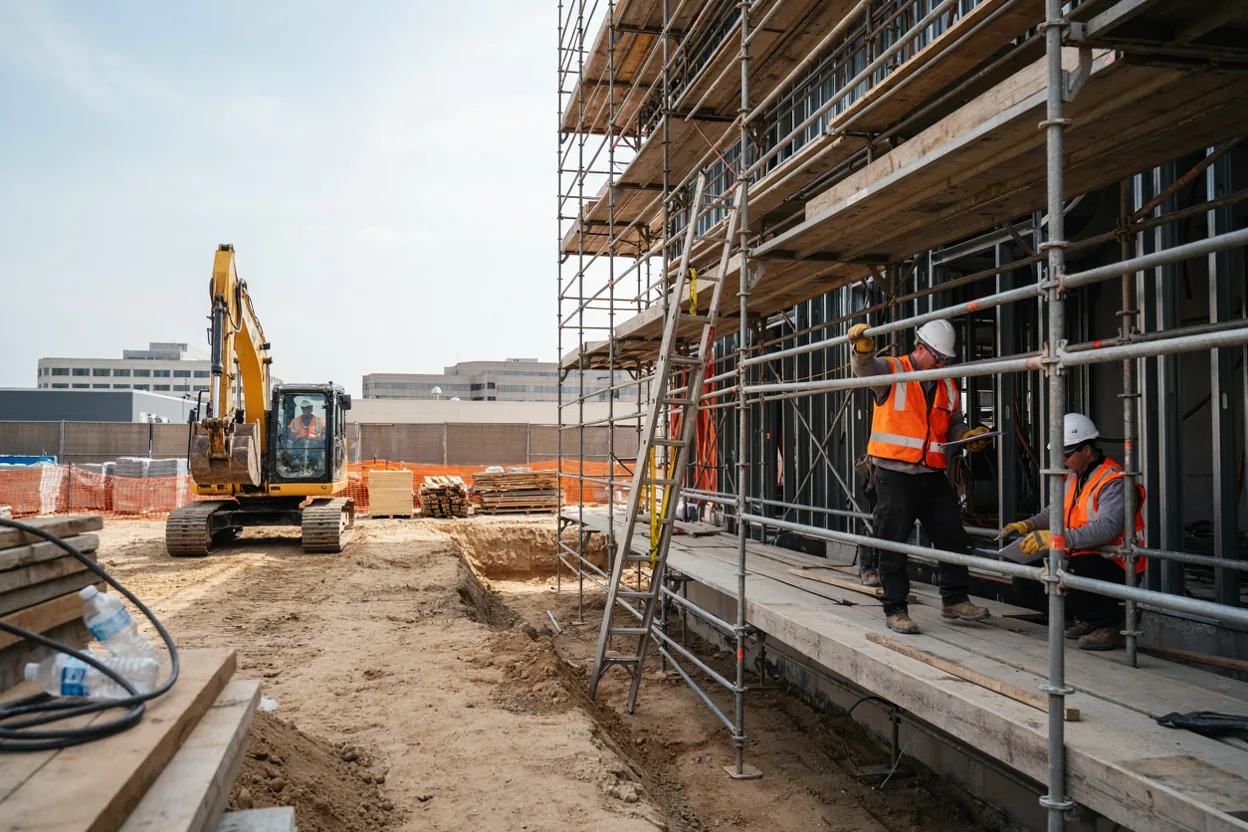
Construction site accidents can involve:
The cause of a construction accident matters because different legal standards may apply to a fall from an elevated work platform, a defective machine, or an unsafe passageway.
Construction injuries can range from fractures and soft-tissue damage to permanent, life-altering disabilities.
Serious injuries may include traumatic brain injury, spinal cord damage, paralysis, crush injuries, amputations, severe burns, and multiple orthopedic fractures. Some workers experience chronic pain, reduced mobility, or psychological consequences following traumatic accidents.
These injuries can significantly impact a person’s ability to earn a living, care for family members, and perform everyday activities.
A construction injury may also require ongoing medical treatment, rehabilitation, adaptive equipment, or long-term medical care. When injuries cause permanent limitations, it is important to evaluate both immediate financial losses and the potential costs of future treatment.
Understanding the full extent of an injury helps determine what workers comp benefits may be available and whether a separate legal claim should be investigated.
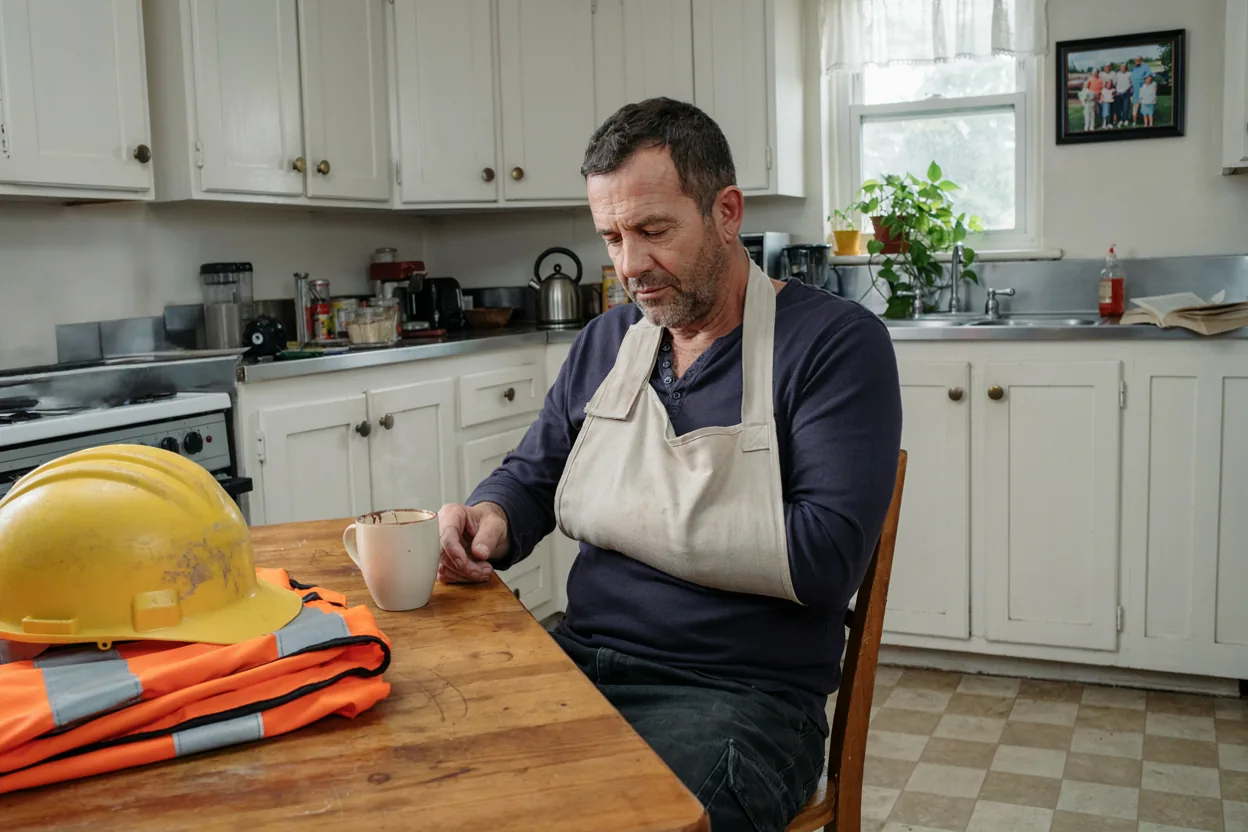
Injured workers in Syracuse may have access to two different legal systems: New York workers’ compensation and, when legally supported, a third-party personal injury lawsuit.
Option 1
Workers' Compensation
Workers compensation generally provides statutory benefits for covered work-related injuries without requiring proof of employer negligence.
Option 2
Third-Party Personal Injury Claim
A third-party personal injury claim, by contrast, ordinarily requires establishing that someone legally responsible for the accident caused or contributed to the injuries. Certain construction injury cases may also involve statutory duties under New York Labor Law.
The availability of either remedy depends on the worker’s employment status, the activity involved, the cause of the accident, and other facts.
New York’s workers compensation system is designed to provide eligible employees with benefits following qualifying work-related injuries and occupational illnesses.
Depending on the circumstances, workers compensation benefits may include authorized medical care, partial wage replacement, disability payments, and certain other statutory benefits.
The New York Workers’ Compensation Board administers the system and resolves disputes over eligibility, treatment, disability, and benefit amounts.
Wage replacement is generally calculated using an employee’s average weekly wage, the applicable degree of disability, and statutory limits. For qualifying disability periods, the basic weekly benefit calculation is two-thirds of the average weekly wage multiplied by the disability percentage, subject to the applicable maximum.
Workers comp does not ordinarily provide compensation for pain and suffering. It also generally serves as the exclusive remedy against a covered employer for covered employment injuries, subject to limited exceptions.
An injured employee should not assume that receiving workers comp benefits prevents every possible lawsuit. The critical question is whether a legally responsible third party may also be involved.
A third-party personal injury claim may be available when an entity other than the worker’s employer or a protected coemployee bears legal responsibility for the accident.
For example, a construction worker injured by defective equipment may have a potential product liability claim against an equipment manufacturer. A worker hurt by an unsafe condition may have a claim against a property owner or contractor if the applicable legal requirements are met.
Similarly, a delivery employee injured in a car accident while performing job duties may have both a workers compensation claim and a separate claim against a negligent driver.
A third party claim is not automatic. The injured worker must establish the applicable basis for liability, causation, and legally recoverable damages.
If workers comp has paid benefits, New York law may also provide the compensation carrier with reimbursement or lien rights against certain third-party recoveries. Settlement consent and other statutory requirements can affect the outcome.
Find out whether a third-party claim deserves a closer look.
Bottar Law can review the circumstances of your workplace accident and explain whether a personal injury claim deserves further investigation. Request a free consultation to discuss your legal options.
New York Labor Law establishes important safety obligations that may apply when construction workers are injured during qualifying construction, demolition, repair, and related activities.
Three provisions frequently considered in construction injury cases are Labor Law Sections 200, 240(1), and 241(6). Each addresses different hazards and has distinct legal requirements.
These provisions do not make every property owner or general contractor responsible for every construction accident. Their applicability depends on the work performed, the parties involved, the cause of the injuries, and the governing law.
Labor Law Section 200 codifies the general duty to provide workers with reasonably safe places to work.
Liability often depends on the nature of the hazard. When injuries result from a dangerous premises condition, courts generally examine whether the defendant created the condition or had actual or constructive notice of it.
When the accident arises from the means and methods of the work, liability generally requires evidence that the defendant exercised supervisory control over the injury-producing activity.
The fact that an owner or contractor had general oversight or the authority to stop unsafe work does not necessarily establish liability.
Labor Law Section 240(1), sometimes called the Scaffold Law, provides special protections against certain elevation-related risks during specified construction activities.
The statute addresses qualifying gravity-related hazards, including certain falls from heights and incidents involving inadequately secured objects that fall because of elevation-related risks.
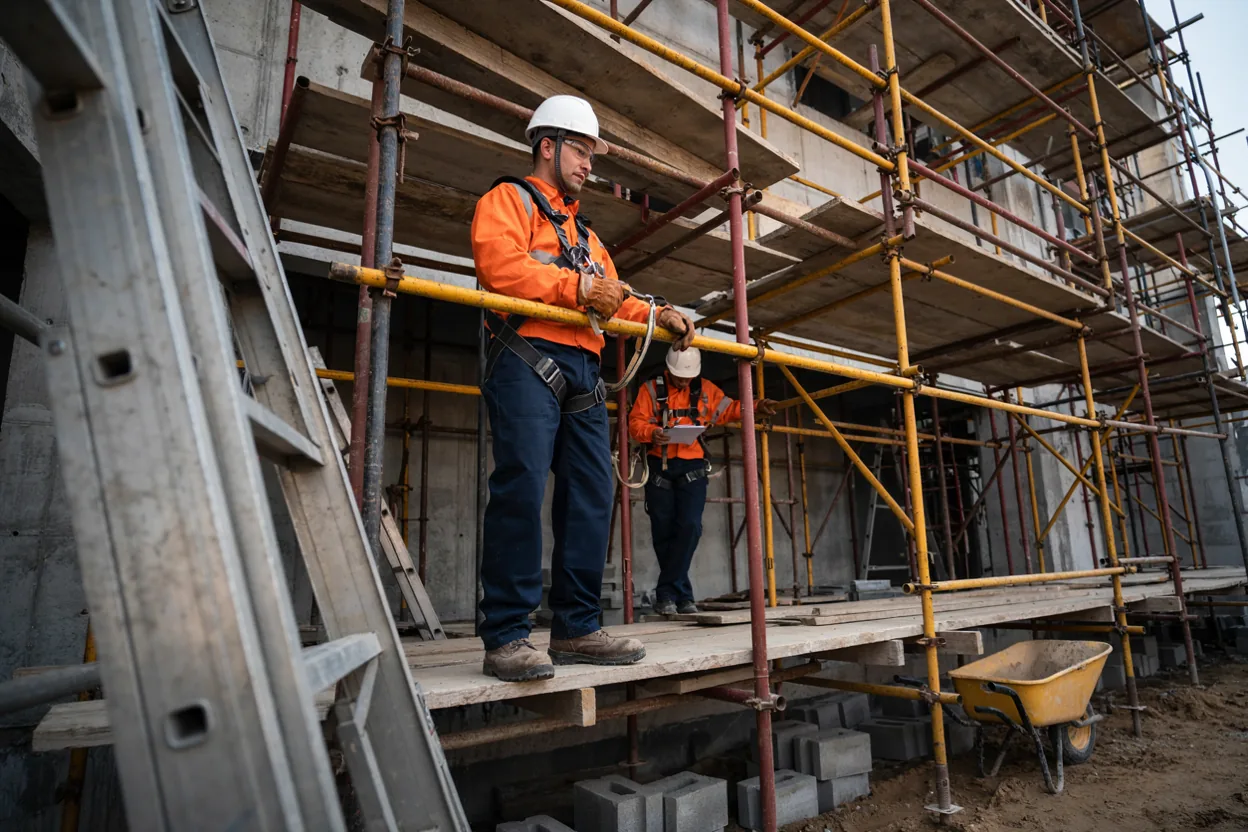
Where the statute applies, owners and contractors covered by the law may face strict or absolute statutory liability when a violation proximately causes the injury, subject to recognized defenses and exceptions.
However, Section 240(1) does not apply to every fall, falling object, or construction site accident. The activity, elevation-related hazard, protective device, and causal connection must satisfy the statute.
Labor Law Section 241(6) imposes a nondelegable duty on certain owners and contractors to comply with applicable safety requirements during construction, excavation, and demolition work.
A claim generally requires identifying a sufficiently specific and applicable provision of the New York State Industrial Code and demonstrating that its violation contributed to the accident.
Unlike a qualifying Section 240(1) claim, comparative negligence may affect recovery under Section 241(6).
These distinctions matter. A construction injury involving an unsafe passageway, improperly guarded equipment, or another hazardous condition may require a different legal analysis from an elevation-related accident.
Bottar Law can assess whether the circumstances of a construction accident support a claim under New York Labor Law or another applicable legal theory.
Statutory references: Labor Law § 200, Labor Law § 240, and Labor Law § 241.
Responsibility for a construction site accident depends on who owed a legal duty, how the incident occurred, and whether a breach of that duty caused the injuries.
Construction projects often involve multiple businesses with different responsibilities. Identifying negligent parties requires more than determining who owned the property or who employed the injured person.
An investigation may examine contractual relationships, site supervision, equipment maintenance, safety procedures, and the actions of individual contractors.
Potential responsible parties may include property owners, general contractors, subcontractors, equipment manufacturers, suppliers, or other third parties.
An owner or contractor may be subject to specific statutory duties under New York Labor Law, depending on the project and circumstances. A subcontractor may be liable under ordinary negligence principles or applicable statutory provisions when its conduct satisfies the relevant requirements.
Equipment manufacturers may face product liability claims if a defect in design, manufacture, or warnings caused an injury.
These questions become particularly important when workers are injured by heavy equipment, defective machinery, unsafe scaffolding, or improperly secured materials.
Not every entity present on a construction site is legally responsible for an accident. The evidence must connect a legally recognized duty or statutory obligation to the injury.
Evidence can help establish how a workplace accident happened and whether another party contributed to the resulting harm.
Important materials may include photographs, witness statements, accident reports, safety inspection records, equipment maintenance histories, construction contracts, surveillance footage, and work site logs.
Where appropriate, an attorney may also examine subcontractor agreements, training records, prior complaints, and communications about hazardous conditions.
For injured workers
Workers should preserve documents and photographs they lawfully possess and identify witnesses while memories are fresh. They should not enter restricted areas, remove company property without authorization, or put themselves at risk to gather evidence.
Prompt investigation can be especially important after serious injuries because physical conditions change, equipment is moved, and electronic records may be overwritten.
Construction is not the only industry where employees face serious workplace hazards. Manufacturing, warehousing, transportation, logistics, utilities, and industrial operations can also expose workers to dangerous machinery, moving vehicles, hazardous substances, and physically demanding tasks.
The most dangerous industries vary depending on whether risk is measured by fatal accidents, nonfatal injuries, or occupational illness rates. Regardless of industry rankings, injured workers deserve an accurate assessment of their legal rights.
Industrial accidents may involve crushing machinery, conveyor systems, forklifts, chemical exposure, electrical hazards, or inadequate machine guarding. Confined-space incidents and construction fires and explosions can also cause severe injuries.
Other work accidents develop gradually. Repetitive tasks can contribute to conditions such as carpal tunnel syndrome, while prolonged exposure to hazardous substances may cause occupational disease.
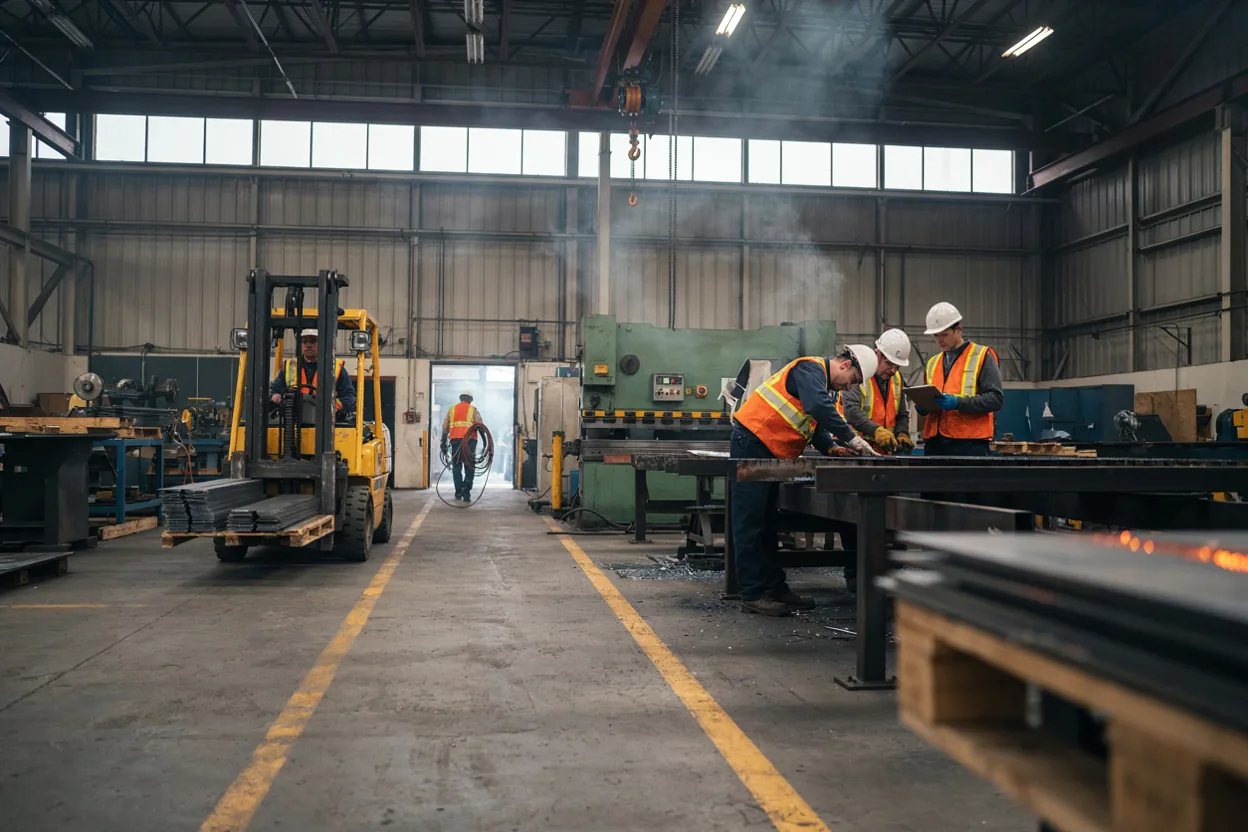
Workers compensation may cover qualifying acute injuries and occupational illnesses. A separate personal injury claim may be available if a legally responsible third party caused the harm.
The circumstances of an industrial injury, the identity of the responsible parties, and the applicable filing deadlines require individual evaluation.
A car accident that occurs while an employee is performing job duties may qualify for workers compensation coverage.
Examples include a delivery driver injured in a car accident, a technician traveling between assigned job locations, or a transportation worker involved in a collision during work.
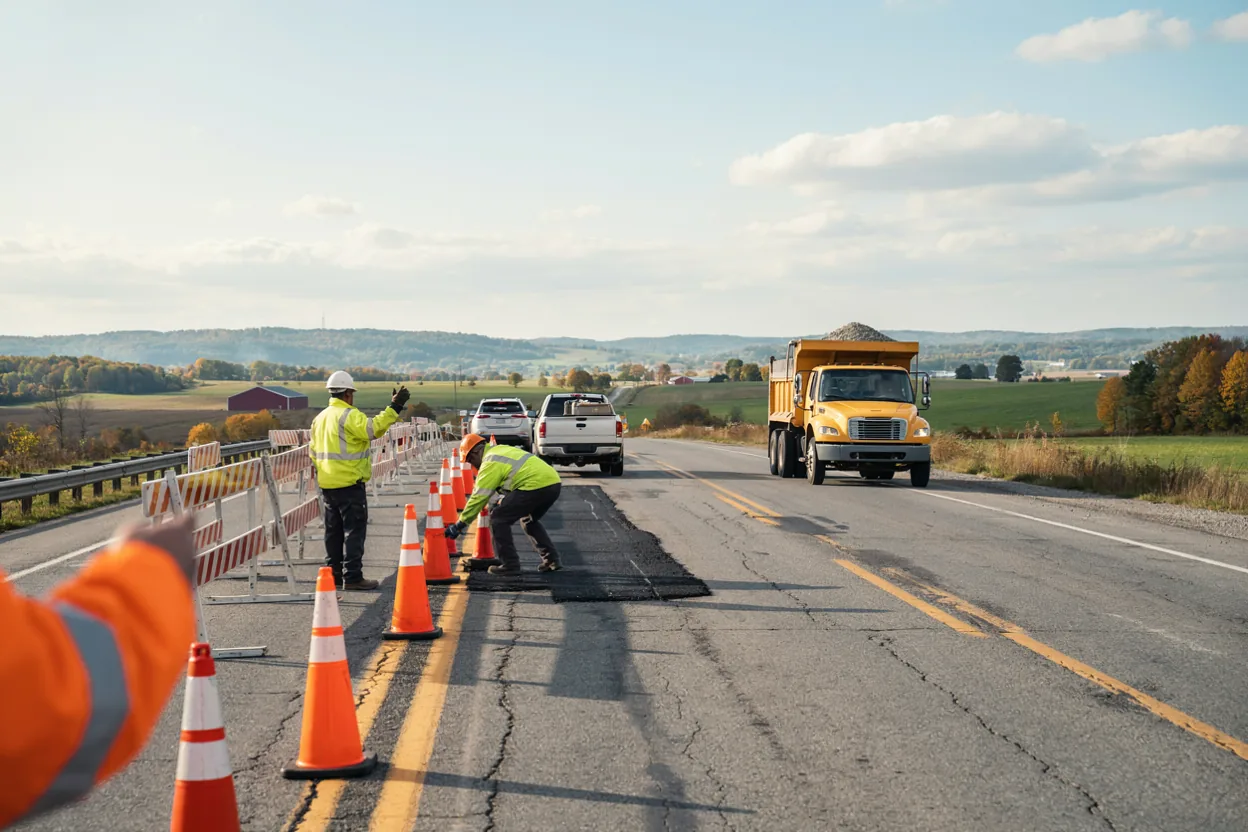
When a negligent third-party motorist causes a car accident, the injured employee may also have a separate personal injury claim against that driver or another legally responsible party.
Not every car accident during a commute qualifies as a workplace accident. New York law generally distinguishes ordinary travel to and from work from travel arising out of and in the course of employment, subject to exceptions.
Work-related motor vehicle accidents may also involve New York no-fault insurance rules and coordination with workers comp benefits.
If you were injured in a car accident while working, the relationship between employment duties, insurance coverage, and third-party liability deserves careful review.
The compensation available after a construction accident depends on the legal claim, the severity of the injuries, the available evidence, and the applicable statutory rules.
New York workers compensation and third-party personal injury claims provide different forms of financial recovery. Understanding that distinction can help injured workers avoid confusing statutory benefits with damages available through a lawsuit.
For qualifying employment-related injuries, workers compensation may provide payment for authorized medical treatment and partial replacement of lost wages.
These benefits can help cover necessary medical care, rehabilitation, and certain disability-related needs, subject to the applicable workers comp rules.

When a third-party personal injury claim is legally available, recoverable economic damages may include medical expenses, lost income, diminished future earning capacity, and reasonably established future care costs.
For workers who are permanently disabled, long-term medical needs and reduced earning capacity may be especially important.
The available recovery must be evaluated carefully to avoid double recovery and to account for workers compensation reimbursement rights, liens, and applicable offsets.
A third-party lawsuit may allow an injured person to pursue compensation for losses that workers comp does not ordinarily cover, including pain and suffering.
Depending on the facts, recoverable damages may include past and future economic losses, physical pain, emotional suffering, and loss of enjoyment of life.
The amount of compensation depends on factors such as the severity of the injuries, evidence of liability, causation, future medical needs, comparative fault where applicable, and other legal considerations.
A personal injury attorney at Bottar Law can evaluate these factors and explain the evidence needed to pursue compensation.
Although an injured person may wish to recover compensation sufficient to address every loss, no lawyer can promise maximum compensation or guarantee a particular settlement or verdict.
The purpose of careful legal representation is to identify the legally available claims, document the harm, and pursue a supported recovery under New York law.
After a construction or workplace accident, your immediate priorities should be medical safety, timely reporting, and preservation of important evidence.
General rules only. Each deadline is subject to statutory exceptions.
Seek medical attention.
If you have serious injuries, obtain emergency assistance. Even injuries that initially appear minor may require medical evaluation. Tell your treating provider that the incident occurred at work.
Notify your employer.
New York workers compensation rules generally require written notice within 30 days of an accidental injury, subject to statutory exceptions. Reporting promptly also creates an important record.
Document what happened.
If it is safe and lawful, photograph the scene, identify witnesses, retain relevant messages, and gather evidence concerning the equipment or conditions involved.
Keep medical and financial records.
Preserve information about medical treatment, work restrictions, lost wages, transportation expenses, and other losses.
Understand your filing deadlines.
A workers comp claim generally must be filed with the Workers’ Compensation Board within two years, subject to applicable rules. Separate personal injury lawsuits may have different deadlines.
Consider speaking with counsel.
A personal injury attorney can help determine whether another party’s conduct may support a claim.
If you need to seek medical attention again because symptoms worsen, do not delay necessary medical care while waiting for an insurance or legal determination.
Sources: Workers’ Compensation Board filing instructions and Workers’ Compensation Law.

After a serious work injury, choosing legal representation is an important decision. You deserve clear explanations, careful attention to your concerns, and an understanding of what the legal process may involve.
Bottar Law is a Syracuse-based personal injury and medical malpractice law firm serving people affected by serious injuries. Our approach emphasizes listening to clients, investigating the circumstances of their injuries, and explaining potential legal options without making promises about outcomes.
Construction injury cases can present complex questions involving workers compensation, statutory safety obligations, multiple contractors, and insurance coverage. Careful investigation is necessary to determine whether a third-party claim is legally supported.
Our firm is headquartered at the Historic Fairfield Estate in Syracuse, New York. This longstanding local landmark reflects Bottar Law’s connection to the community and our commitment to treating people with dignity during difficult circumstances.
Bottar Law serves clients in Syracuse and the broader Central New York region, with potential matters involving injuries throughout Upstate New York evaluated according to the firm’s service capabilities and applicable law.
Our case-review process begins with understanding what happened, identifying potential sources of liability, and explaining possible next steps.
Not every workplace injury supports a lawsuit, and not every construction accident involves a violation of New York Labor Law. We believe prospective clients should understand those distinctions before making important legal decisions.
Whether you have questions about a construction site accident, industrial injuries, or a work-related collision, Bottar Law can discuss the circumstances and the potential need for further investigation.
Yes, you may be able to pursue a third-party personal injury claim even while receiving workers compensation benefits.
New York’s workers compensation system generally prevents covered employees from suing their employers for ordinary negligence arising from covered workplace injuries. However, a separate lawsuit may be available against a negligent third party.
For example, an injured construction worker may have a claim against an owner, contractor, or equipment manufacturer when the facts and applicable law support liability.
Workers comp reimbursement rights may affect any recovery, so the two claims should be evaluated together.
A general contractor or property owner may be legally responsible if the facts establish an applicable duty, a statutory violation, or another recognized basis for liability.
New York Labor Law Sections 200, 240(1), and 241(6) may apply in qualifying construction injury cases.
However, ownership of a construction site or general involvement in a project does not automatically establish liability under every provision.
An investigation must determine how the injuries occurred and whether the defendant’s conduct or statutory responsibility supports a claim. For examples of the risks involved, see our pages on construction site accidents and scaffolding accidents.
The deadline depends on whether you are filing a workers compensation claim, a personal injury lawsuit, or another type of claim.
For a typical accidental work injury, New York workers compensation rules generally require employer notification within 30 days and filing a claim with the Board within two years, subject to exceptions.
Many New York personal injury lawsuits are subject to a three-year statute of limitations under CPLR 214(5).
Claims involving municipalities or other public entities may require a notice of claim within 90 days and may have shorter lawsuit deadlines. Other exceptions can apply.
Because deadlines differ, prompt legal review is important.
Sources: CPLR § 214, General Municipal Law § 50-e.
Yes, workers comp benefits may be available when a car accident arises out of and occurs in the course of covered employment.
An employee driving for deliveries, service calls, or other assigned work duties may qualify, depending on the circumstances.
If another driver caused the car accident through negligence, a separate personal injury claim may also be possible.
Ordinary commuting accidents are generally treated differently, although exceptions exist. Motor vehicle insurance and no-fault rules may also affect the claims process.
If you are permanently disabled following a covered workplace injury, you may qualify for disability-related workers compensation benefits based on the nature and extent of your impairment.
New York workers compensation distinguishes among different categories of permanent disability, and the duration or amount of benefits depends on the applicable classification and statutory rules.
If a legally responsible third party caused the injuries, a separate claim may also permit recovery for future lost wages, reduced earning capacity, and long-term care needs.
Medical evidence and an individualized assessment are essential.
There is no fixed amount of compensation available for every construction injury.
Workers compensation benefits are determined under statutory formulas and eligibility rules. Third-party personal injury damages depend on liability, the extent of the injuries, financial losses, future needs, and other case-specific factors.
Some injury cases involve disputed liability, comparative negligence, insurance limitations, or reimbursement obligations.
A legal review can help identify the categories of compensation potentially available, but it cannot guarantee a particular result.
You have enough to manage after a serious workplace accident. Understanding your legal rights should not add to the uncertainty.
At Bottar Law, we help individuals and families in Syracuse and Central New York explore potential claims involving construction accidents, industrial injuries, dangerous equipment, and work-related motor vehicle accidents.
During a free consultation, you can explain what happened, ask questions, and learn whether further investigation of a potential third-party personal injury claim is appropriate.
You do not need to determine on your own whether workers compensation, New York Labor Law, or another legal theory applies before reaching out.
Contact Bottar Law to request a free consultation and take the next step toward understanding your options.
Attorney Advertising. This information is provided for general educational purposes and is not legal advice. Contacting the firm does not, by itself, establish an attorney client relationship. Past outcomes, if discussed elsewhere on this website, do not guarantee a similar result.